
Table of Contents
- Is Credit Repair Legal and Safe?
- Signs of a Credit Repair Scam
- How to Dispute Credit Report Errors Yourself
- How Long Does Credit Repair Take?
- Frequently Asked Questions
Last Updated: September 2, 2026
Is Credit Repair Legal and Safe?
Credit repair is legal when done properly. The Credit Repair Organizations Act (CROA), enforced by the Federal Trade Commission, sets strict rules about what credit repair companies can and cannot do. Legitimate credit repair services are legal and can be safe, but scams are common enough that you need to know what to watch for.
Signs of a Credit Repair Scam
Scammers prey on desperation, targeting those struggling with credit by promising fast results and charging upfront fees.

Red flags include upfront payment demands before any work is done. Legitimate credit repair companies cannot legally charge you until they’ve delivered services. Another major warning sign is guaranteed results, no one can guarantee your credit score will improve by a specific amount. Scammers also use deceptive language like “erase negative items” or “create a new credit identity,” and may suggest illegal tactics like disputing accurate information or creating a new Social Security number.
Watch for companies that won’t provide a written contract. CROA requires a written agreement explaining your rights, including your three-day right to cancel. If they refuse to put it in writing, that’s a major red flag.
How to Dispute Credit Report Errors Yourself
You don’t need to pay anyone to dispute errors on your credit report. The process is straightforward under the Fair Credit Reporting Act.
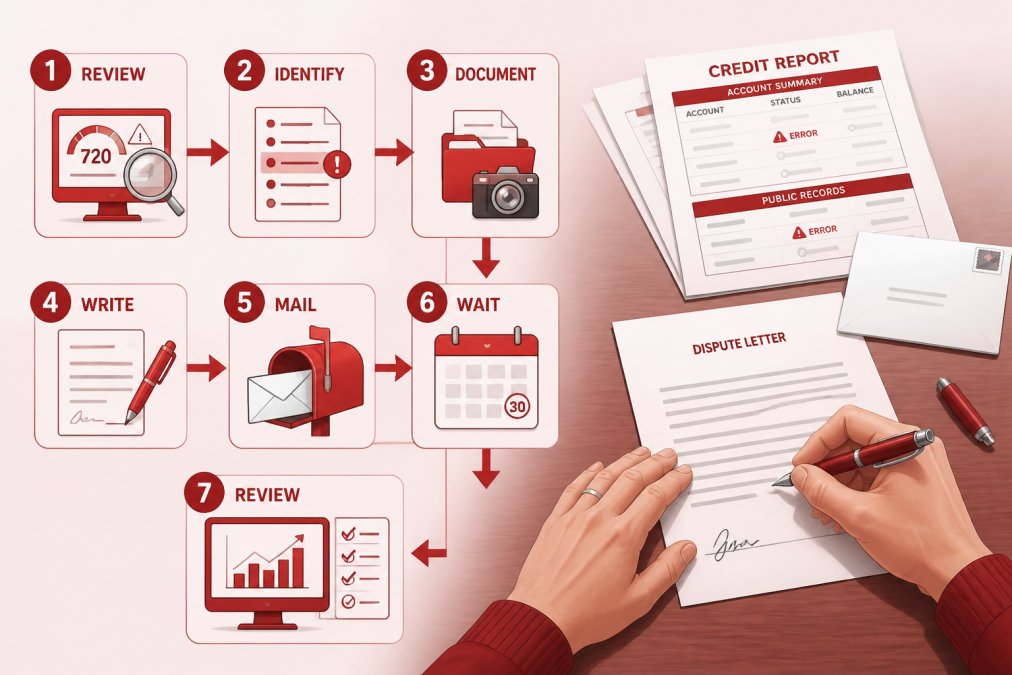
Start by getting a free copy of your credit report from all three bureaus, Equifax, Experian, and TransUnion, at AnnualCreditReport.com. Review each report for errors like accounts that aren’t yours, incorrect payment histories, or duplicate negative items. Send a written dispute directly to the credit reporting agency with copies of supporting documentation, using certified mail for proof of delivery. The credit bureau has 30 days to investigate and respond. If they can’t verify the information, they must remove it.
Document everything. Keep copies of your dispute letters, responses, and supporting documentation to create a paper trail if you need to escalate later.
How Long Does Credit Repair Take?
Credit repair isn’t fast. Disputing errors typically takes 30 to 60 days per dispute cycle. If you have multiple errors, you’ll work through them in batches, extending the overall timeline. Rebuilding credit after disputes are resolved takes even longer, your score improves gradually as you establish positive payment history and reduce debt. Most people see meaningful improvement within 6 to 12 months of consistent effort. Anyone promising results in 30 days is overselling.
Credit repair can work when you’re dealing with legitimate errors on your report, but the process requires patience and caution. The safest approach is working with a company that operates transparently within CROA guidelines, provides a written contract, and charges only for services delivered. Honore Credit specializes in identifying inaccuracies in your credit profile and advocating for accurate representation, focusing on your financial goals rather than just your credit score. If you’re ready to take control of your credit, get started with The Credit Approval Plan and get clarity on your path forward.
Frequently Asked Questions
Is credit repair legal?
Yes, credit repair is legal when performed according to federal law. The Credit Repair Organizations Act (CROA) governs how credit repair companies operate, requiring them to provide written contracts, disclose what they can and cannot do, and prohibit upfront fees before services are delivered. However, not all credit repair services are legitimate, many engage in deceptive practices or make false promises. Working with a reputable company that follows CROA requirements protects you as a consumer.
What are the warning signs of a credit repair scam?
Scams often demand upfront payment before delivering any services, which violates CROA. Other red flags include guaranteed credit score improvements, promises to remove accurate negative items, pressure to cut contact with credit bureaus, or refusal to provide a written contract. Legitimate services explain what they can realistically accomplish, provide clear documentation, and only charge after services are rendered. Always verify a company’s compliance with consumer protection rules before engaging.
How long does credit repair typically take?
Credit repair timelines vary based on the number of inaccuracies, the complexity of disputes, and how quickly credit reporting agencies respond. Most disputes take 30 to 90 days to resolve once filed. Some items may clear faster, while others require multiple rounds of correspondence. Realistic expectations matter: legitimate credit repair addresses errors methodically, not overnight. Results depend on your specific credit report and the nature of the items being disputed.
This article was written using GrandRanker